

Key Takeaways
- Local climate conditions, including temperature fluctuations, humidity levels, and severe weather events, have a significant impact on the performance of roofing materials.
- Regular inspection and timely maintenance are crucial for managing climate-induced wear and extending the roof’s lifespan.
- Choosing the right material—such as metal for its durability or slate for its longevity—can help minimize climate-related deterioration.
- Good ventilation and regular gutter maintenance further protect roofing systems from moisture damage and extreme temperatures.
When considering how long your roof will last, the materials you choose—and the weather patterns in your area—are equally pivotal. From dramatic temperature changes to persistently humid conditions, environmental factors put roofing systems to the test. By understanding these effects, homeowners can confidently select materials and choose the best maintenance for their roof replacement ensuring their investment stands the test of time.
Understanding the interaction between climate and roof type is essential for maintaining a home’s integrity and value. Selecting suitable materials tailored to local climate conditions can help prevent weather-related roofing failures, including leaks and rot. Factors like severe storms, extreme heat, and heavy snow loads require careful material selection. Additionally, reliable installation and proactive maintenance are vital for extending a roof’s lifespan and ensuring long-term stability.
If you’re dealing with damage or suspect your roof has weather-related issues, prompt roof repair is crucial for avoiding more significant problems down the road. Regular inspections and timely interventions not only prevent costly emergencies but also preserve the overall structural integrity of your home. Investing in quality materials, expert installation, and consistent upkeep ensures your roof continues to protect your home efficiently for years to come.
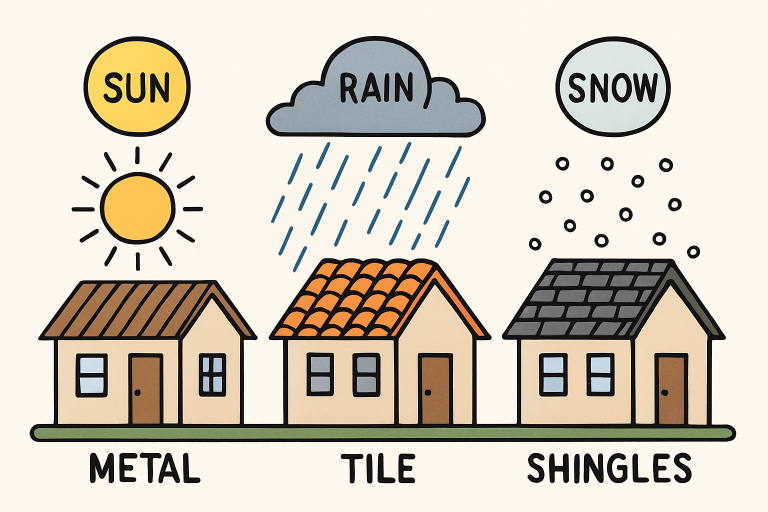
Impact of Climate on Roofing Materials
Temperature Extremes
Fluctuating temperatures are especially challenging for roofs. In areas where summers are blisteringly hot and winters are freezing, roofing materials expand and contract, which can lead to cracks, tears, and early material fatigue. Asphalt shingles, one of the most common choices, tend to lose flexibility in these conditions, which may reduce their expected 15-30 year lifespan. In contrast, metal and clay tile roofs offer improved resilience, often lasting 40-100 years or more with proper care.
Effects of Humidity and Moisture
High-humidity areas pose a different set of risks. Moisture promotes the growth of mold, algae, and even rot—weakening certain materials over time. Wooden shingles, though aesthetically pleasing, are particularly prone to decay without routine sealing and ventilation. Metal roofs, as well as synthetic materials, handle moisture more effectively. Proper ventilation is essential to help roofs “breathe” and minimize trapped moisture, which can otherwise shorten the lifespan of your roof.
Severe Weather Events
Storm-prone regions demand roofs that can withstand powerful winds, hail, and torrential rain. Shingles and tiles may be torn away or fractured by high winds and flying debris, while hail can leave dents and punctures that undermine the integrity of the roofing system. Metal roofs, on the other hand, perform exceptionally well in these conditions due to their combination of toughness and flexibility. Regardless of the material, regular inspection following storms ensures that problems like broken shingles or loose flashing are caught and addressed early.
Choosing the Right Roofing Material
Metal Roofing
Metal is fast becoming a go-to choice for homeowners in a variety of climates. Its reflective surface makes it ideal for regions that experience intense sunlight, as it diverts heat away from the home and contributes to lower energy bills. With a lifespan often surpassing 40–70 years, metal roofing rarely needs replacement or significant repairs. Its resistance to fire, rot, insects, and fungus adds to its value, and with recycled options widely available, it stands out as an environmentally responsible pick.
Slate and Tile
Classic and elegant, slate and tile are renowned for their incredible longevity, routinely lasting 50–100 years. Naturally fire-resistant and minimally affected by weather extremes, these materials are ideal for long-term performance. Their primary drawback is weight: slate and tile require sturdy homes with reinforced roofing structures and must be installed by skilled professionals. With regular inspections and occasional replacement of cracked pieces, these roofs can easily outlast the average homeowner’s tenure.
Asphalt Shingles
The widespread use of asphalt shingles is attributed to their cost-effectiveness and ease of installation. However, in climates with large temperature swings or persistent humidity, they can falter. Their typical life expectancy is shorter—usually 15–25 years—while hail, wind, or ice can further expedite deterioration. Frequent inspections for granule loss, curling, or missing shingles help prevent minor problems from becoming expensive leaks or structure-damaging failures.
Maintenance Practices to Enhance Roof Longevity
- Routine Inspections: Schedule roof inspections at least twice a year to identify signs of wear or damage.
- Ventilation: Maintain attic and roof ventilation to limit moisture buildup and temperature extremes.
- Clean Gutters: Keep gutters and downspouts free of debris to prevent water from backing up onto the roof.
- Immediate Repairs: Address minor problems—such as cracked tiles, loose shingles, or bent flashing—promptly to prevent larger structural issues.
Conclusion
Choosing a roof that aligns with your climate and desired longevity is a foundational decision for every homeowner. Durable materials backed by regular maintenance offer the best defense against the relentless forces of nature. Factoring in climate, budget, and aesthetics will help safeguard your home and maximize the return on your roofing investment for years to come.