
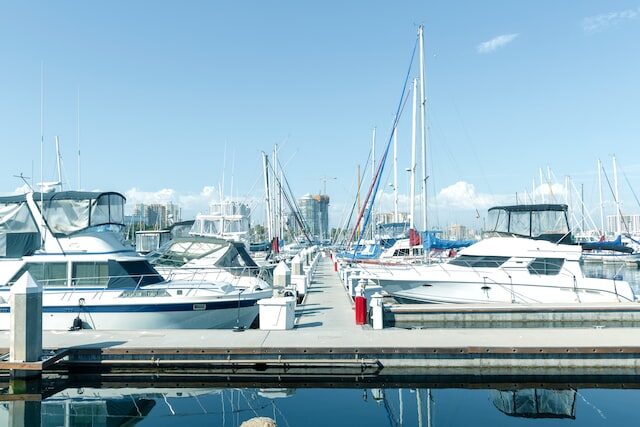
Despite what many people think, marine construction, like Palm Beach County docks, for instance, involves various technologies. Among the most critical technologies include filter cloth, sandstone, Dolomite, value engineering, and more. Read on to discover how each of these technologies can be used to improve your boat’s performance and safety.
Value engineering (VE)
VE can be applied at any stage of the project life cycle. The VE process combines standard metrics with a systematic methodology. These metrics help assess the performance of the solutions.
VE can be applied to equipment, supplies, and systems. This will reduce costs and improve quality.
The VE process begins with the planning stage. In this stage, the VE team evaluates the project elements and makes the best value choices. These solutions will be seamlessly integrated into the project plan.
The VE team should also consider how the solution will impact the environment. This will include consideration of energy consumption and resulting costs.
Filter cloth
Among the numerous factors for marine construction, filter cloth should be noticed. Filter cloth is made of synthetic fibers and is used in various processes. However, the selection of a filter cloth should be made after having a clear idea of the filtration requirements of the process. Choosing the appropriate filter cloth can be done by knowing the slurry characteristics and the number of impurities that need to be filtered.
There are two main types of filter cloth: monofilament and polypropylene. Both have been shown to perform several valuable functions. The monofilament is a smooth continuous extrusion that delivers the highest flow rates. On the other hand, polypropylene has good resistance to most acids and moisture absorption. It is also free from mildew, making it suitable for use in chemical plants.
Ship hydrostatics and stability
Using new techniques and technology, Ship Hydrostatics and Stability introduces the fundamentals of hydrostatics and stability in marine construction. It demonstrates the application of theory in real-life situations and presents various practical examples. Professional engineers or students can use this book to understand and apply the principles of hydrostatics and stability.
The book’s first section focuses on the basic concept of hydrostatics and stability. It introduces the concepts of the hull form, the position of the center of buoyancy, and the initial stability of a floating body. In a few sections, ordinary differential equations are employed to solve for the hull form.
Sandstone
Typical sandstone is grey to brown, red, yellow, or white. It is a sedimentary rock that is formed from buried sand and mud. It is a common material used in masonry work. Often, the rock is used for bridge piers, river walls, and other structures.
Sandstones have varying mechanical properties, depending on the type and the mineral composition. The pore structure of sandstone is vital in determining its physical properties: capillaries and tiny pores in the matrix form the pore system.
The physical properties of sandstones are related to the grain size distribution and the composition of the minerals in the matrix. The pore size distribution of sandstones can be analyzed by X-ray diffraction.
Dolomite
During the early 1900s, the steel industry expanded and required high-volume waterborne transportation. The use of dolomite was proposed to help with this. Dolomite is a common sedimentary rock mineral found in many ancient rock formations.
Dolomite is often found in ancient sedimentary carbonates. It is also present in metamorphic rocks. It can be used for construction purposes and is especially useful in the production of asphalt concrete. It is often considered to be a replacement for aragonite, which is commonly found in asphalt concrete. It is also used in road construction and as a flux for blast furnaces. It is also used in paper making and glass making.
Reflecting wave energy
During the oil crisis of 1973, researchers re-examined the potential for wave energy extraction. Waves travel long distances with minimal energy loss. This energy can be converted into usable electricity. However, it is essential to understand how wave energy is converted and its effect on the local environment.
The most basic wave energy conversion model is based on piercing the water surface with a wave energy device. The device collects the kinetic energy of waves and converts it into electrical energy. The device can be used as a standalone or integrated into existing box-type breakwaters. The integrated system has a lower transmission coefficient.